The Quiet Revolution: Why Luxury Now Means Invisible Technology
Julian Hart · January 14, 2026
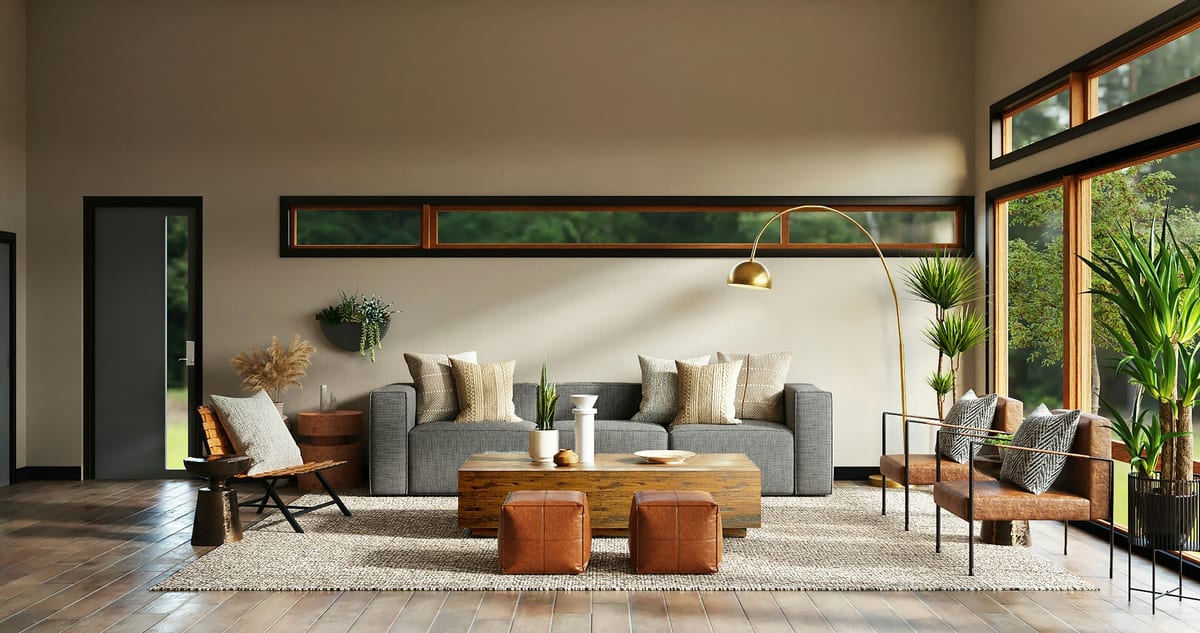
There was a time, not very long ago, when luxury technology in the residence advertised itself. The home theater was named. The keypad was branded. The control surface was the size of a hardback novel and lived, like a hardback novel, on a coffee table where it could be admired. The marketing followed the device. The room followed the marketing.
Something has shifted. Across the residences we have served in the last five years — and certainly across the last twelve months — the most demanding clients have begun asking for the opposite. Their architects ask for it. Their interior designers ask for it. The principals themselves, in increasingly clear language, ask for it. They want the system to disappear.
Disappearance, as a brief, is not the same as absence. The performance is required to be uncompromising — reference cinema, true circadian lighting, hardened security. What is required, additionally, is that none of it announces itself in the room. No black plastic on the millwork. No cluster of remote controls. No stack of devices in the consoles, no cooling fans audible in the bedroom, no second piece of gear ever suggested when one will do.
The work of an integrator under that brief becomes very different. Specification matters more than ever — and the specification is now half-written by the architect. Cable runs are coordinated during framing rather than retrofitted. Keypads are engraved to match the millwork inlay. Equipment closets are designed by the mechanical engineer alongside the HVAC, because they are now part of the building's invisible infrastructure rather than its furniture.
The platforms have responded. Lutron's keypad lines have refined to a point of jewelry. Control4 and Savant have extended their voice and tablet integrations so a residence may run with no surfaces visible at all. Sony, Sonus faber, and Bang & Olufsen have refined in-architecture loudspeaker systems that disappear into joinery. The work — the new luxury — is in choosing among these platforms with a curator's eye and integrating them with a cabinetmaker's discipline.
What remains, of course, is the human practice. The most invisible system in the world still requires a calibration session at occupancy, a seasonal review six months later, and a phone number for the household to call. These do not disappear. They become the relationship. And it is the relationship — not the device — that is the product of a properly considered installation.
If anything, the quiet revolution is a return to first principles. A residence is for living, not for visiting. Technology in service of that residence has only one job: to be the rest of the house. To not be more interesting than the architecture. To not be more interesting than the family in the architecture. The quietest systems we install are the ones our clients describe, six months in, by saying nothing about them at all.
Disappearance, as a brief, is not the same as absence.
Designing for Longevity: Building Systems That Age Gracefully
On specifying for fifteen years rather than fifteen months — and the small disciplines that compound into a system you do not have to replace.
Read articleThe Architecture of Light: Circadian Lighting in High-End Residences
Tunable, rhythmic, almost biological — what circadian lighting actually is, and why it has quietly become the most consequential technology in the modern home.
Read articleBegin the Conversation.
Every engagement begins with a private conversation — often under NDA, always without obligation. We would be honored to hear about the residence you are composing.